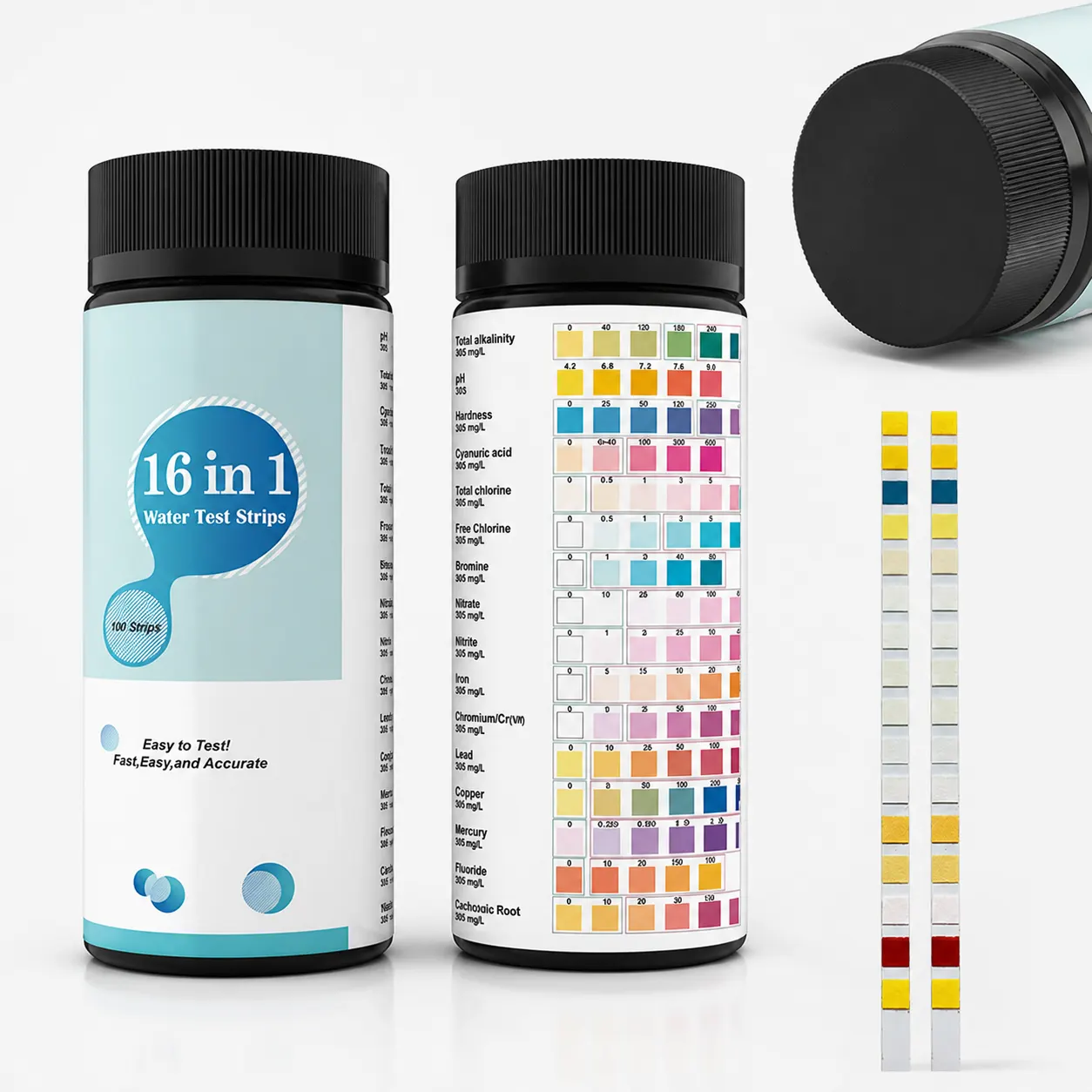
Short answer: A koi pond water test kit should be chosen by the readings you can verify, not by the word koi in a search result. Aquarfish lists 100 16-in-1 strips for pool and fish-pond water checks, which may suit a keeper who wants repeat screening. The public page does not list the individual parameters, accuracy, reading window or koi-health effect. Before buying, compare the package chart with the question you need to answer, keep a dated pond log, and use a specific test or professional advice when fish welfare depends on a result the listing does not document.
Do not confuse koi intent with koi compatibility
The product page names pool and fish-pond water checks, not koi-specific testing. That makes the product relevant to a koi pond as a setting, but it does not prove that the strips are formulated for koi, that every koi-care parameter is included or that the result can be used to make a treatment decision.
OATA's pond guidance says water quality should be checked before fish are introduced and highlights ammonia and nitrite as important checks. Use that as a reason to verify the chart, not as evidence that the Aquarfish strip includes those tests. The manufacturer does not specify a koi-specific parameter list.
| Buying question | Documented answer | Confirmation still needed |
|---|---|---|
| Pond setting | Fish-pond use is named | Koi-specific coverage |
| Quantity | 100 strips per tube | Whether that suits your testing routine |
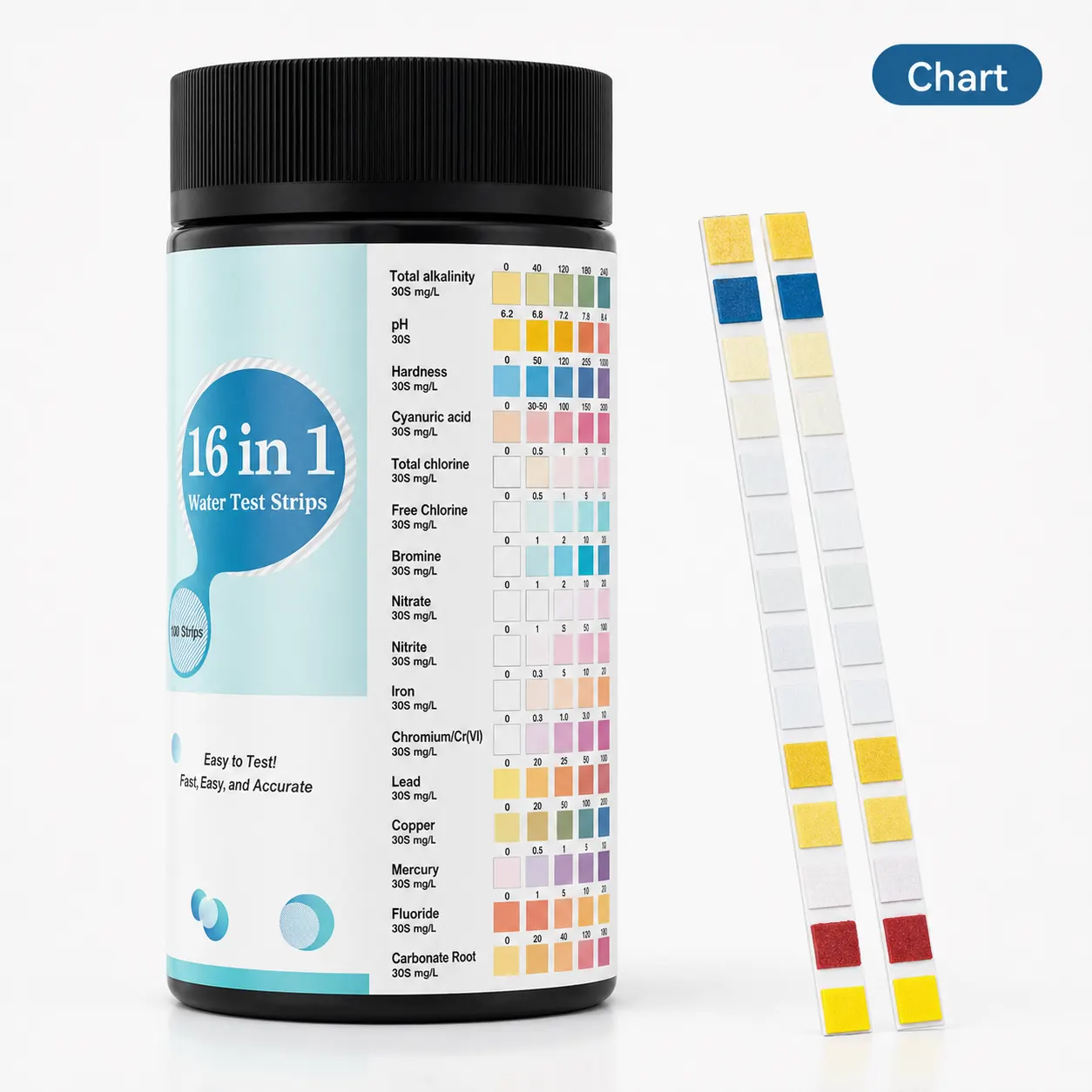
| Format | 16-in-1 water quality wording | The exact named parameters |
| Performance | No accuracy claim is published | Precision, range and reading window |
Build a repeatable koi-pond check
The useful comparison is usually between today and your own earlier notes, not between a single strip colour and an internet target. Record weather, recent feeding, filter work, water changes, visible water condition and fish behaviour alongside the result. That does not make the strip more accurate; it makes the decision less dependent on memory.
Use one planned action after each check. If the result is unclear, repeat it carefully. If it remains outside the expectation for your pond, use a named liquid or laboratory method where appropriate and ask an aquatic specialist. Avoid adding treatments simply because a colour looks different from the last test.
- Write the koi-pond question and the parameter that must be checked.
- Confirm that parameter on the package chart before purchase or use.
- Take and read the sample exactly as the manufacturer instructs.
- Log the result with pond conditions and any recent maintenance.
- Retest or seek specialist help before making a high-consequence change.
Separate readings from fish-health decisions
Water testing is part of pond husbandry, but a test strip is not a fish examination. OATA's pond advice links water quality checks with keeping pond fish, while the Aquarfish page only describes a water-quality strip product. Neither source supports a claim that this SKU diagnoses parasites, infection, stress, poisoning or another fish-health condition.
If a koi is gasping, isolating, bleeding or rapidly worsening, treat that as a welfare concern rather than a shopping problem. A strip may be one piece of information, but the product page does not specify an emergency procedure, diagnostic accuracy or treatment compatibility. Use appropriate aquatic advice and a more specific investigation.
Limits and checks before buying
Manufacturer does not specify a koi-specific formulation, individual parameter list, accuracy, range, reading time, storage instruction, calibration, certification or fish-health outcome. The 16-in-1 description is broad, so it should not be expanded into claims about every value discussed by koi keepers.
This is a reasonable shortlist item when you want 100 pond-oriented strips for an initial check and can confirm the chart meets your needs. It is a poor substitute for a named, validated test when a koi-care decision depends on a result the product page leaves unspecified.
Related guides and product details
Buy for the documented pond-strip format and quantity, then match every koi-care decision to a named test and appropriate aquatic advice. Read Pond Water Test Strips: A Careful UK Buying Guide for related guidance. Read Fish Pond Test Strips UK: What to Check First for related guidance. Review the documented specification on the 16-in-1 Pool and Fish Pond Water Quality Test Strips, 100 Strips product page before ordering.
Sources and safety context
- Supports the 16-in-1 wording, 100-strip quantity and pool and fish-pond positioning. Current Aquarfish product page.
- Supports pond water-quality checks and cautious fish-keeping context; it does not establish koi-specific product performance. How to look after pond fish.