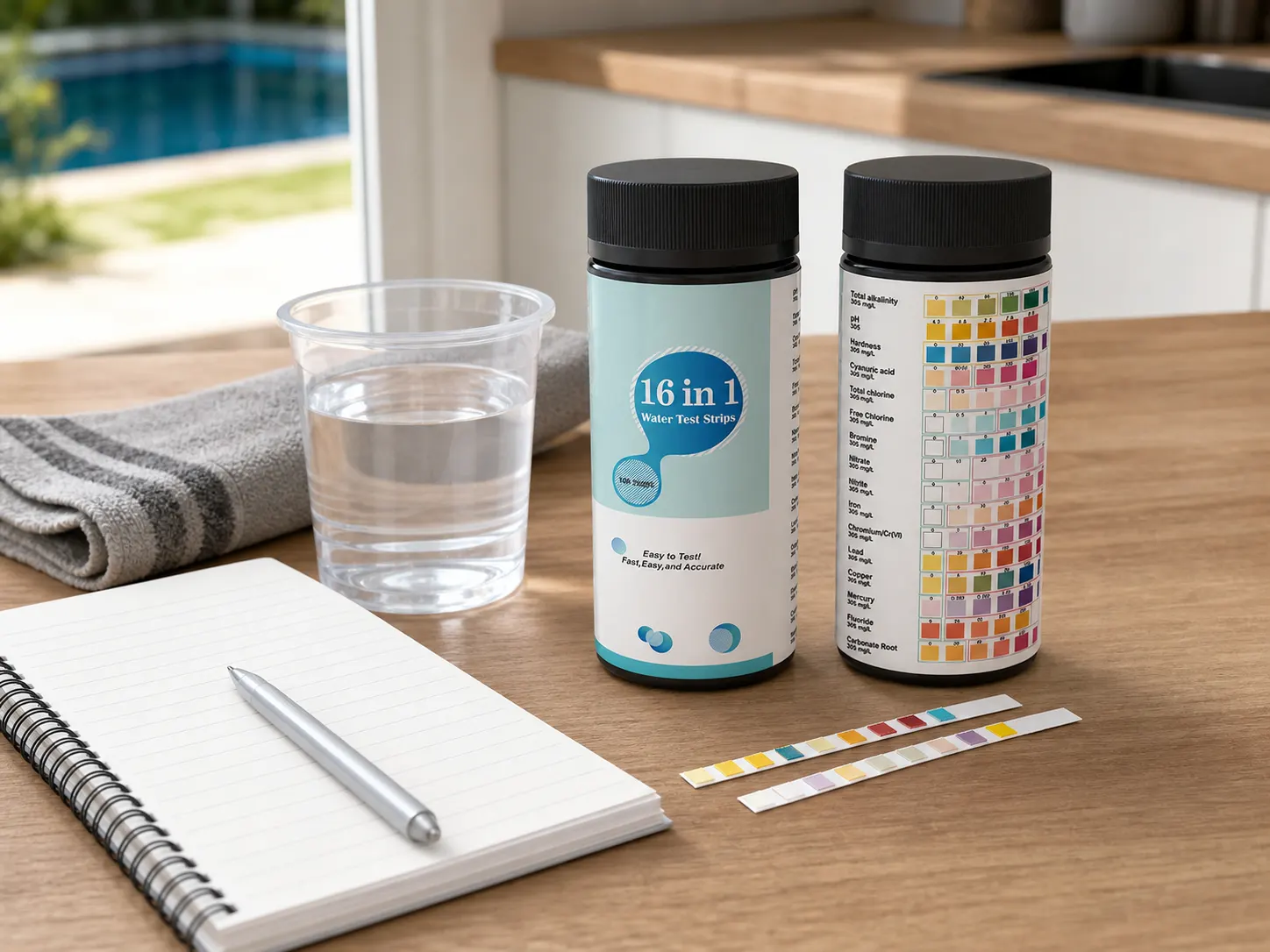
Short answer: Fish pond test strips can be a sensible first check when a UK garden pond changes, but the label is not a complete care plan. Aquarfish lists a tube of 100 16-in-1 water quality strips for pool and fish-pond checks. The current page does not list each parameter, accuracy, reading time or fish-health outcome. That means the buying decision is simple: confirm that the package names the checks you need, use the chart exactly as supplied, record the result, and seek a more specific test or aquatic advice when fish behaviour or the reading is worrying.
Match the label to the pond job
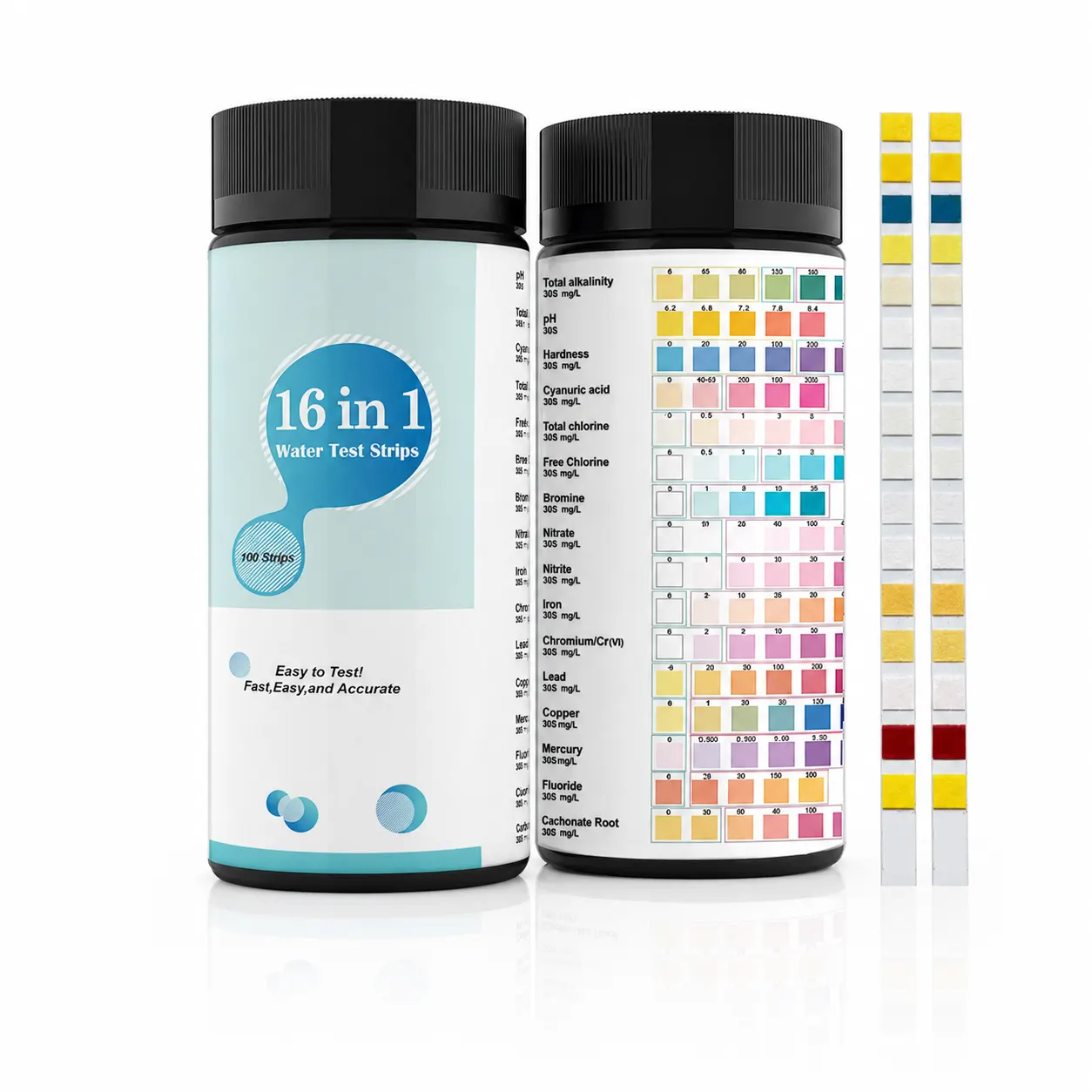
The Aquarfish product page describes a 16-in-1 water quality strip product for pool and fish-pond checks, with 100 strips in the tube. That supports a broad pond-screening use and repeated sampling. It does not, by itself, confirm that a named parameter such as ammonia, nitrite, nitrate, pH or hardness is included.
Before ordering, write down the actual question behind the search. If you need a particular result because a fish specialist has asked for it, check the package chart or obtain written confirmation first. The manufacturer does not specify the individual parameter list on the current public page, so do not turn the phrase 16-in-1 into a promise about coverage.
| Published point | What it supports | What remains unknown |
|---|---|---|
| 100 strips | Repeat checks are possible | How often your pond should be tested |
| 16-in-1 wording | A multi-check strip format | The individual parameters included |
| Fish-pond use | The listed setting includes ponds | Suitability for a particular species or problem |
| Water quality | The product is presented for water checks | Accuracy, certification and laboratory equivalence |
Use a careful pond-side routine
A strip only helps if the sample and the comparison are handled consistently. OATA advises pond keepers to check water quality and to make sure ammonia and nitrite are at suitable levels before adding fish. That is care guidance, not evidence that this product measures those values. Use the product chart and do not assume a colour block answers a parameter it does not name.
Keep a short log with the date, visible pond condition, recent feeding or maintenance, fish behaviour and the strip result. A record helps you distinguish a one-off uncertain colour from a repeated change. It also gives an aquatic retailer or fish-health professional more useful context than a single unrecorded number.
- Check the tube and chart for the named pond parameters you actually need.
- Take the sample using the product instructions and avoid mixing pond water with other samples.
- Compare colours within the supplied reading window and record any uncertain match.
- Retest when the result is unexpected instead of changing several things at once.
- Escalate to a more specific test or aquatic advice if fish are unwell or the result remains concerning.
Keep fish welfare separate from product promises
OATA's pond guidance treats water quality as part of responsible pond care and says the water should be suitable before fish are added. A strip result can support that checking habit, but it cannot establish that fish are healthy, diagnose disease or guarantee that a pond is safe in every respect.
If fish are gasping, lying unusually, injured or deteriorating quickly, do not rely on a strip as the only response. Record what you can, use the correct parameter-specific test where available and contact an aquatic retailer or fish-health professional. The product page does not claim a fish-health diagnosis or outcome.
Limits and checks before buying
The current product page documents the broad format, quantity and pond setting. Manufacturer does not specify the individual parameters, accuracy, reading time, storage conditions, calibration, certification or compatibility with a particular pond treatment. Those missing details matter if your purchase depends on one exact result.
Buy when the package chart matches your pond question and you are comfortable treating the strips as an initial screen. If you need a published accuracy figure, a laboratory result, a fish-health conclusion or a named parameter that is not shown, choose a better-documented test or ask the manufacturer before ordering.
Related guides and product details
Choose these strips for documented fish-pond screening and repeat checks, then verify any parameter or welfare decision that needs more evidence. Read Koi Pond Water Test Kit: Match the Checks to the Evidence for related guidance. Read Pond Water Test Strips: A Careful UK Buying Guide for related guidance. Review the documented specification on the 16-in-1 Pool and Fish Pond Water Quality Test Strips, 100 Strips product page before ordering.
Sources and safety context
- Supports the 16-in-1 wording, 100-strip quantity and pool and fish-pond water-check positioning. Current Aquarfish product page.
- Supports regular pond water checking and the need to assess ammonia and nitrite before adding fish; it does not certify this product. How to look after pond fish.